

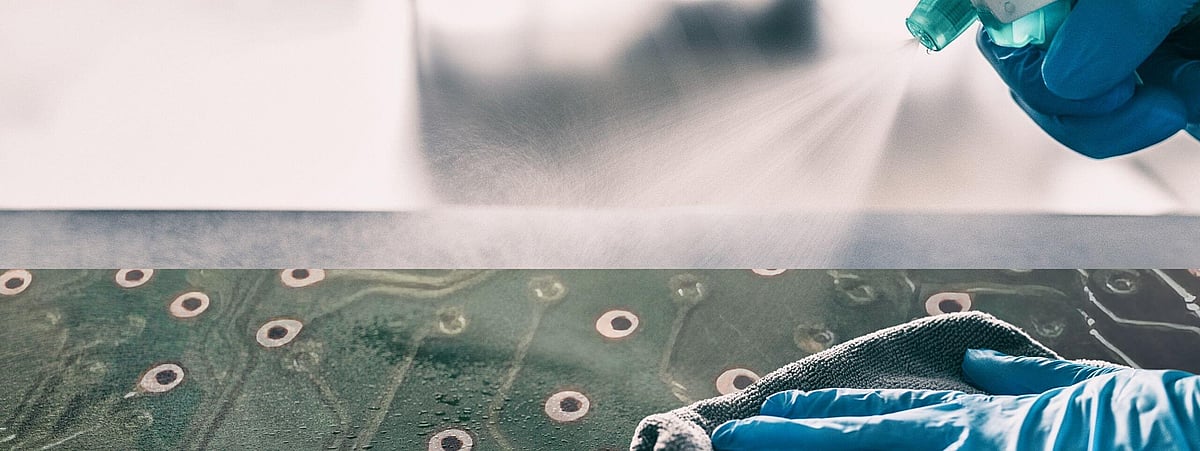
The cleaning of electronic components is a crucial step in the production of modern electronics. It ensures that PCBs and assemblies function reliably and that their service life is maximized. The aim of surface treatment is to remove flux, solder paste and adhesive residues as well as general soiling such as dust, oil or deposits that occur during the various production processes. Thorough cleaning not only improves the surface quality, but also prevents the formation of leakage current paths, which can lead to the failure of electronic components.
Why cleaning is important in electronics production
In the electronics industry, the demand for small, powerful and reliable devices is constantly increasing. This makes the cleaning of electronic assemblies particularly relevant to ensure functionality and longevity. Clean surfaces are crucial for:
- High surface resistance: Residues on conductor tracks can change electrical properties.
- Adhesion of protective coatings and casting resins: Clean components enable better coatings.
- Prevention of corrosion: Flux removal protects against long-term damage.
- Reliability of production processes: Thorough component maintenance reduces production downtimes.
- Efficient post-processing: Clean surfaces facilitate the application of protective coatings and the integration of assemblies into end products.
Typical cleaning processes in production
Effective cleaning takes place in several production steps:
- Before printing and soldering: removal of residues from upstream processes.
- After printing: Remove excess adhesive or solder paste from stencils.
- After soldering: Metal degreasing and flux removal to prevent corrosion and residues.
- Post-processing: Removal of adhesives and coatings for further processing steps.
- System maintenance: Preparation of production systems to ensure process quality.
Especially in high-precision electronics production, every step is crucial. Even the smallest residue can impair the function of printed circuit boards, shorten their service life or increase repair costs later on.
-
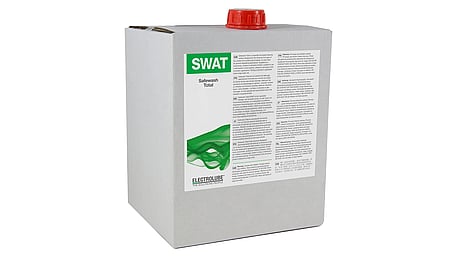
ESWAT05L
SWAT Safewash Total 5l Bidon37 Available immediately -
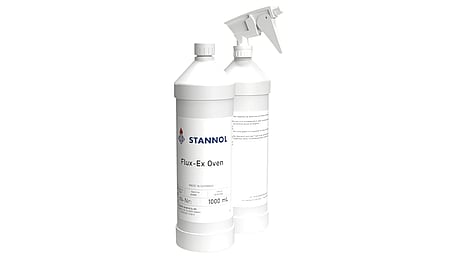
860040
Stannol Universal Cleaner Flux-Ex Oven, 1 literCHF 22.306 Available immediately -
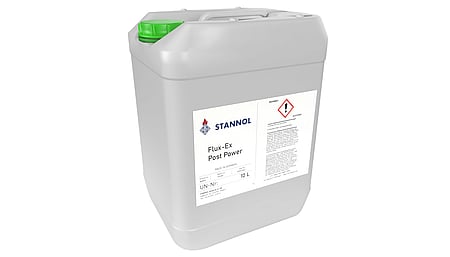
860031
STANNOL Flux-Ex Post Power, 10 litersCHF 124.50Available to order -

860021
STANNOL Flux-Ex Post, 10 litersCHF 144.30Available to order -

860001
STANNOL Flux-Ex Pre, 10 litersCHF 101.30Available to order -
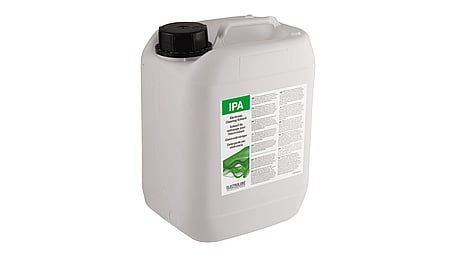
EIPA05L
IPA cleaning solution 5l Bidon6 Available immediately -
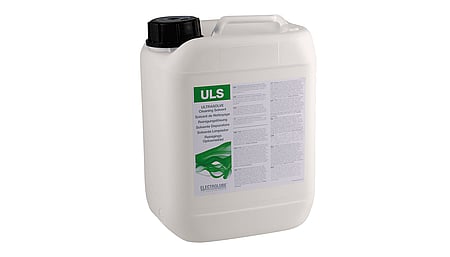
EULS05L
ULS Ultrasolve 5l BidonAvailable to order -

ESWAS05L
SWAS Safewash Super 5l Bidon2 Available immediately
No-clean flux: Reduced cleaning, but not superfluous
Many manufacturers today rely on no-clean processes, in which fluxes with a lower solids content are used to reduce the need for subsequent cleaning. However, these products still contain resin and activators which, in combination with other residues, can impair the adhesion of protective coatings and reduce the performance of the components. This is why the cleaning of assemblies remains an indispensable, multi-stage process in electronics production.
Cleaning agents for every need
Different cleaning agents are used depending on the requirements:
- Flammable or non-flammable: Safety-optimized for various production environments.
- Water-based or solvent-based: For different degrees of soiling and material types.
- Large containers and aerosols: Flexible use - from industrial series production to selective applications.
-
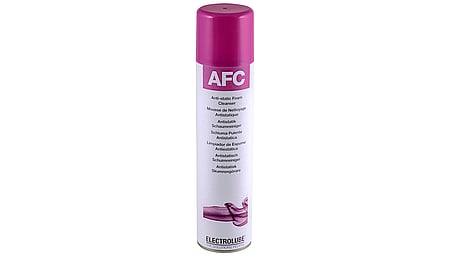
EAFC400D
AFC Antistatic Foam Cleaner 400mlCHF 10.401 Available immediately -
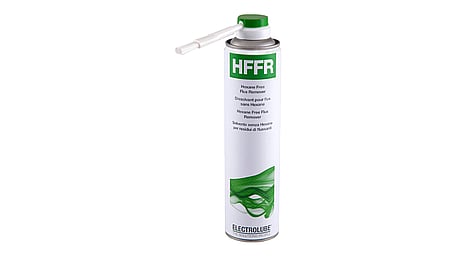
EHFFR400DB
HFFR flux remover 400ml with brushCHF 14.5068 Available immediately -
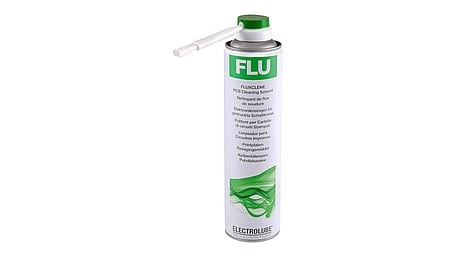
EFLU400DB
FLU flux cleaner 400ml with brushCHF 18.00117 Available immediately -

EULS400DB
ULS Ultrasolve 400ml with brushCHF 19.7050 Available immediately
-

704.400.000
Isopropanol (IPA), universal cleaner Purity of 99.9% 400ml sprayCHF 10.5023 Available immediately -
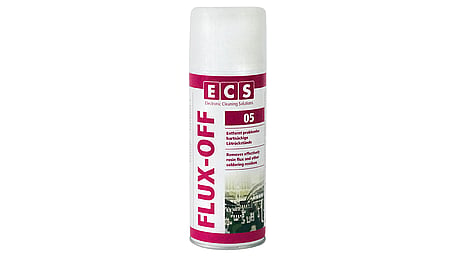
705.400.000
Flux-off, removes residues of soldering flux 400ml sprayCHF 9.8030 Available immediately -
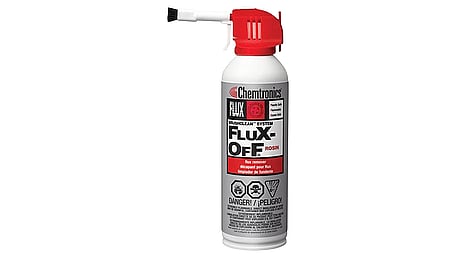
ES835BE
Flux-Off® Rosin Flammable Flux Remover Brush Clean with Brush 200mlCHF 18.00Available to order -
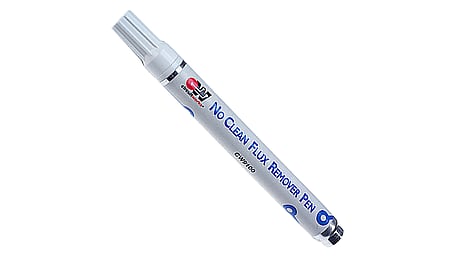
CW9100
No Clean flux remover pen 9gCHF 13.508 Available immediately
-

2506-N
Trace Tech flux remover pen, for PCB rework and repair 11.5mlCHF 11.508 Available immediately -
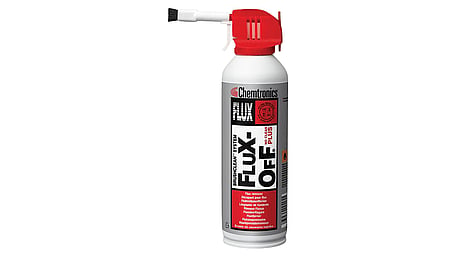
ES896BE
Flux-Off®NoClean Flammable flux remover Brush Clean with brush 200mlCHF 16.5052 Available immediately -
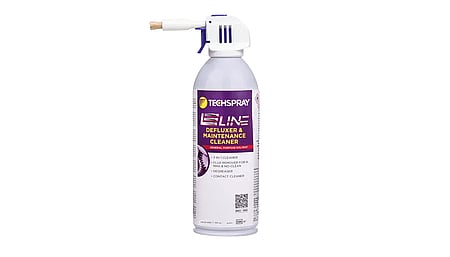
1621A-400S
E-Line DeFluxer, contact and flux cleaner, flammable (400ml)CHF 13.70144 Available immediately -

ELFFR400DB
LFFR lead-free flux remover 400ml with brushCHF 18.50Available to order
Water-based products offer environmentally friendly solutions that are easy to dispose of, while solvent-based cleaners are particularly effective on stubborn stains.
Sustainability and efficiency
Modern cleaning processes in the electronics industry are increasingly taking sustainability aspects into account. Efficient systems minimize the consumption of solvents, enable the reuse of baths and reduce the environmental impact. At the same time, they ensure that residues on electronic components are removed reliably, precisely and efficiently. This is particularly important in industries where high safety and quality standards apply.
-
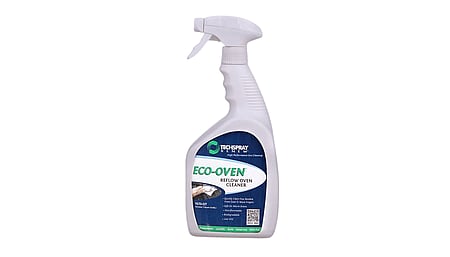
1573-LT
Cleaner, environmentally friendly, non-flammable for reflow ovens, wave systems 950 mlCHF 18.5023 Available immediately -
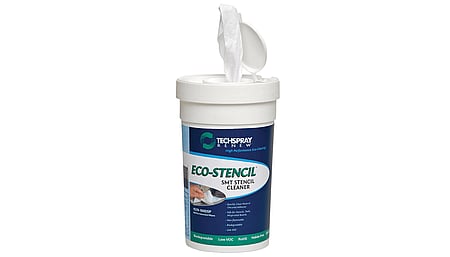
1570-100DSP
Eco-Stencil UM, non-flammable SMT paste and adhesive remover 100 pcs.CHF 23.00Available to order -

1570-LT
Eco-Stencil UM, non-flammable, SMT paste, adhesive remover 900 mlCHF 15.707 Available immediately -
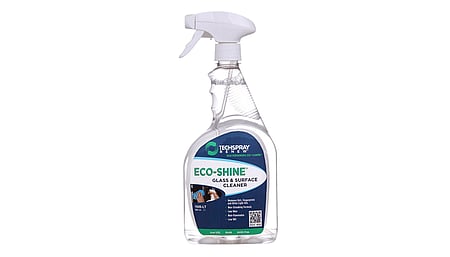
1505-LT
Eco-Shine glass and surface cleaner, non-flammable glass cleaner 950mlCHF 10.50Available to order
Conclusion: cleaning remains essential
Despite technological innovations such as no-clean fluxes, cleaning electronic components is an indispensable part of production. Whether flux removal, metal degreasing or general component care, this process is critical to the quality, reliability and longevity of electronic assemblies. Manufacturers benefit from clean components through improved adhesion of protective coatings, higher surface resistance and a lower failure rate.
-
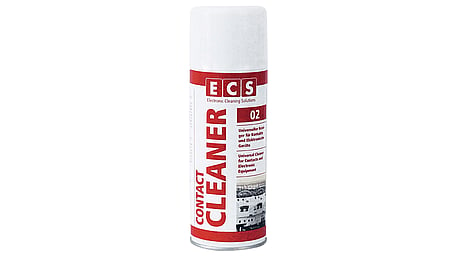
702.400.000
Contact-Cleaner, cleaner/degreaser for contacts and components 400ml sprayCHF 9.8011 Available immediately -
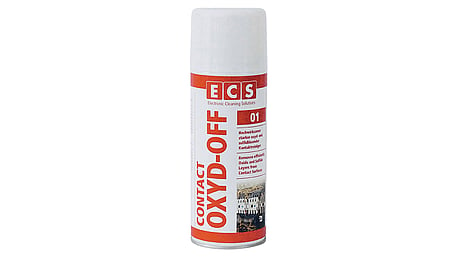
701.400.000
Oxyd-Off, oil-based contact cleaner 400ml sprayCHF 8.8011 Available immediately -
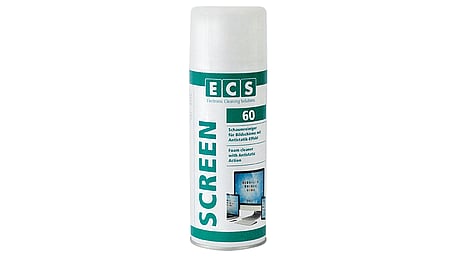
760.400.000
Screen, universal foam cleaner 400ml sprayCHF 7.2023 Available immediately -
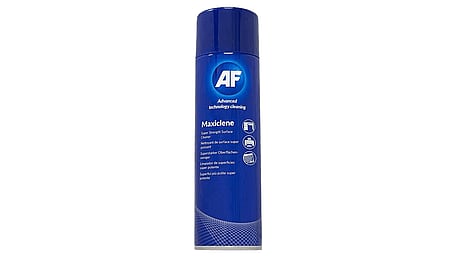
MXL400
MXL400 Antistatic super-strong surface cleanerCHF 10.20Available to order
FAQ - Cleaning electronic components
Which cleaning agents are suitable for PCB production?
Depending on the degree of soiling and the material, water-based or solvent-based cleaning agents can be used to ensure effective removal of soiling.
Are no-clean fluxes really "clean-free"?
No. No-clean fluxes reduce the effort required, but residues can still impair the adhesion of protective coatings and the electrical performance of components.
When is cleaning particularly important?
Cleaning electronic components is particularly important before and after soldering, as well as after printing stencils, when reworking coatings and adhesives and during regular system maintenance.
What are the advantages of aerosols over large containers?
Aerosols can be used flexibly for selective cleaning tasks, while large containers are ideal for series production and larger cleaning processes.
-
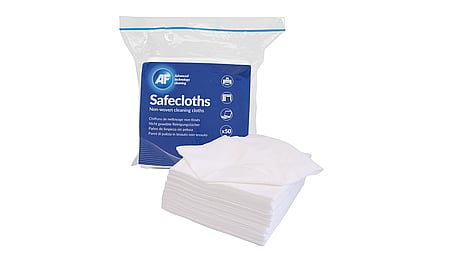
SCH050
SCH050 - Cleaning cloths, 34×32 cm, 50 piecesCHF 13.5030 Available immediately -
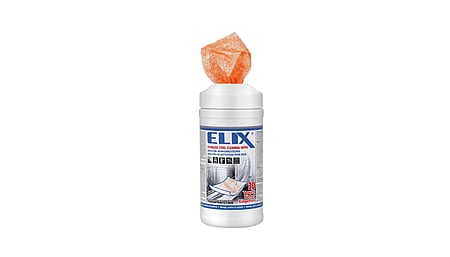
478.030.000
Stainless steel cleaning cloths, 30 pieces ELIXCHF 11.7023 Available immediately -
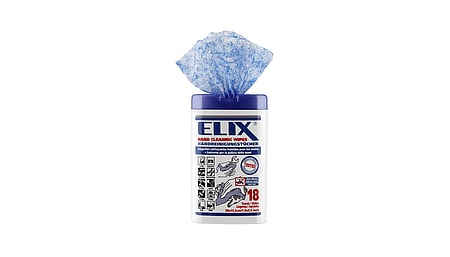
491.018.000
Hand cleaning cloths for greases, adhesives, paints, tar, lubricants ,18 pieces ELIXCHF 5.7036 Available immediately -
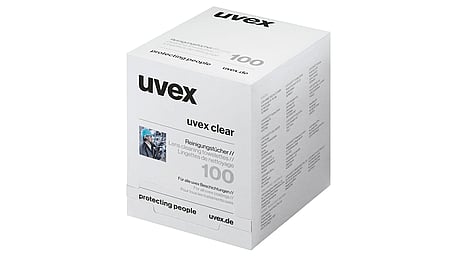
9963005
uvex wet wipes 100 piecesCHF 10.907 Available immediately -
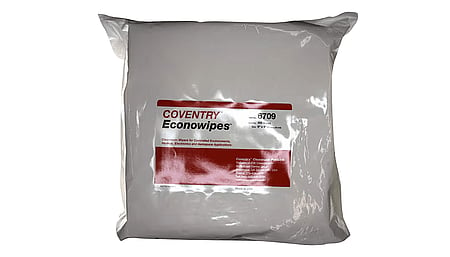
6709
Cleaning cloths non-woven fabric 45/55 polyester/cellulose mix (22.9cmx22.9cm) 300 pcs.CHF 59.0010 Available immediately -
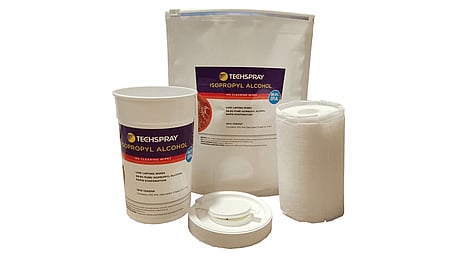
1610-100K
Techspray Isopropyl 99.8% alcohol Pre-soaked wipes (13cm x 20cm) 100pcs.CHF 29.503 Available immediately -
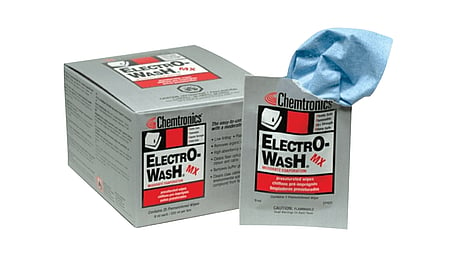
CP421
Electro-Wash® MX Pre-saturated poly/cellulose cloth (20.3 cm x 25.4 cm) 25 pcs.CHF 69.008 Available immediately -
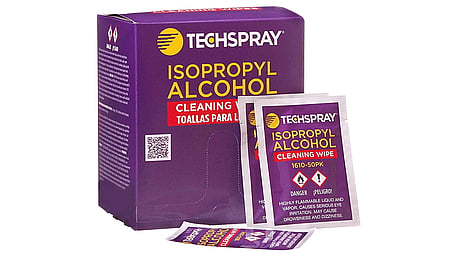
1610-50PK
Techspray Isopropyl 99.8% alcohol Pre-soaked wipes (10cm x 17cm) 50pcs.CHF 21.1054 Available immediately -
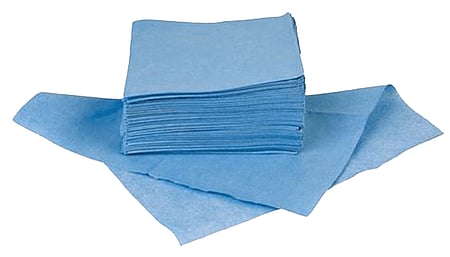
2359-300
TechClean highly absorbent 45/55 poly/cellulose cloths (300 cloths - 23cm x 23cm)CHF 61.208 Available immediately -
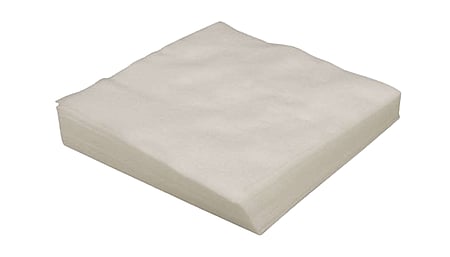
2351-100
TechClean class 100,100% polyester cloth, sensitive surfaces 10cmx10cm,100pcsCHF 8.2010 Available immediately -
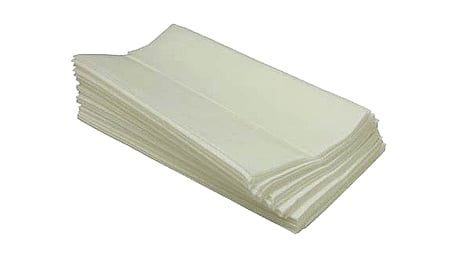
2350-100
TechClean class 100 highly absorbent 45/55 poly/cellulose cloth 23cmx23cm 100pcsCHF 19.5012 Available immediately -

186-12099-11
ESD wipes, 50 piecesCHF 39.402 Available immediately -

ASTI200
Safetiss - Lint-free paper towelsCHF 7.9031 Available immediately -

ELIX-90
Hand cleaning cloths ELIX, 27 x 31 cm (90 pieces) - Cleaning cloths workshop blueInstead ofCHF 27.50CHF 17.5014 Available immediately -

EIPA100
IPA soaked cleaning cloths (100 pcs)CHF 25.1059 Available immediately -
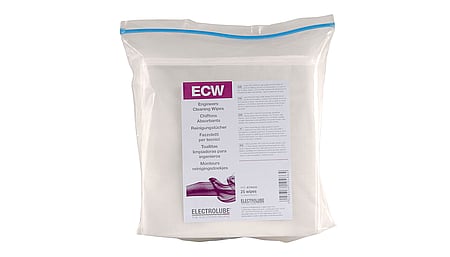
EECW025
ECW cleaning cloths (25 pcs)CHF 21.8030 Available immediately
-
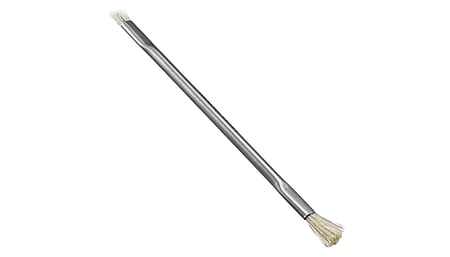
2031-1
Tech Brush - metal handle horsehair (handle 4.7 mm x 11.4 cm)CHF 19.806 Available immediately -

2021-1
Tech Brush - wooden handle with pig hair , 6,35mm x 34,9 mm-11,1mm, handle 19,7cmCHF 8.705 Available immediately -
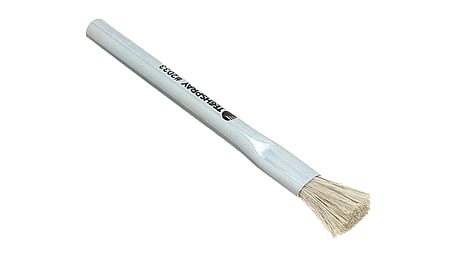
2033-1
Tech Brush - metal handle horsehair (hair length 19 mm) (handle 9.5 mm x 11.4 cm)CHF 13.705 Available immediately -
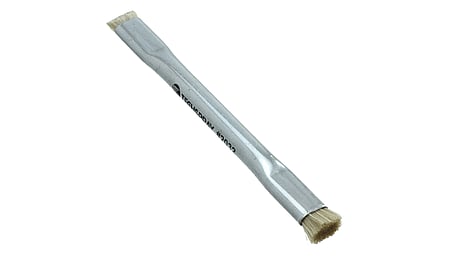
2032-1
Tech Brush - metal handle horsehair (handle 9.5 mm x 11.4 cm)CHF 17.605 Available immediately -

186-81125-11
ESD conductive round hard brush natural bristles, 125mmCHF 68.001 Available immediately -

14S-B30-65
ESD dissipative brush, hard, 30 x 65mmCHF 19.903 Available immediately -

186-93080-11
ESD conductive hard brush, nylon, 80mm (yellow)CHF 26.601 Available immediately -
 ESD conductive flat brushes for assemblies - nylon (yellow)CHF 11.50 - CHF 17.00
 -
 ESD conductive flat brushes for assemblies - nylonCHF 11.50 - CHF 17.00
 -
ESD conductive flat brushes for assemblies - natural bristlesCHF 11.50 - CHF 17.70
-
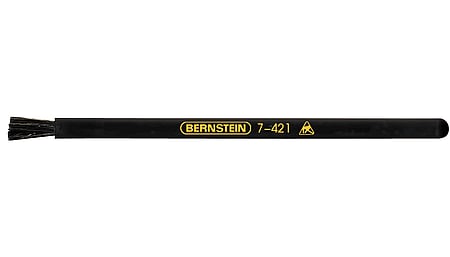
7-421
ESD brush, bristle width 6mmCHF 13.203 Available immediately -

7-422
ESD brush, bristle width 20mmCHF 16.906 Available immediately
-

CT200
Chemtronics 4.8 mm double swabs made of 100% pharmaceutical cotton (100 pcs.)CHF 8.8018 Available immediately -

CT100
Chemtronics 4.8 mm swabs made of 100% pure pharmaceutical cotton (100 pcs.)CHF 8.0047 Available immediately -

CCT2425
Chemtronics 75 mm handle, double pointed head, 3 mm pointy tipCHF 2.40199 Available immediately -

CF4050
Chemtronics 4.8 mm, foam swab, polypropylene handle (50 pcs.)CHF 24.50Available to order -
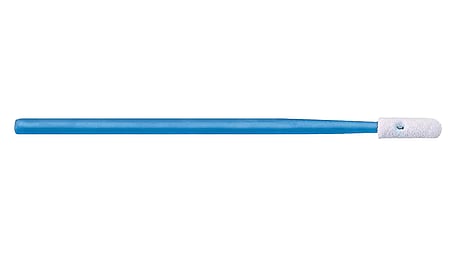
41050ESD
Chemtronics ESD swabs, 3.5 x 72mm (500pcs.)CHF 145.007 Available immediately -

CCF2050
Cleaning swabs, 130mm, foam, pack of 50, ChemtronicsCHF 34.8031 Available immediately -
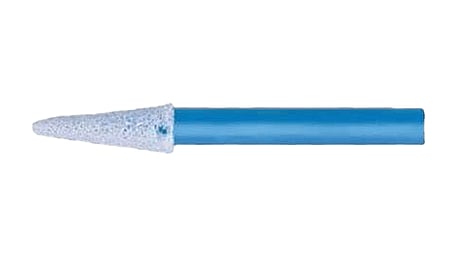
44070ESD
Chemtronics swabs, ESD, 3.3mm, foam, polypropylene, 80mm handle (500pcs.)CHF 135.003 Available immediately -

ASBU000
Safebuds - cotton cleaning sticksCHF 37.508 Available immediately