XLamp® COB LED arrays
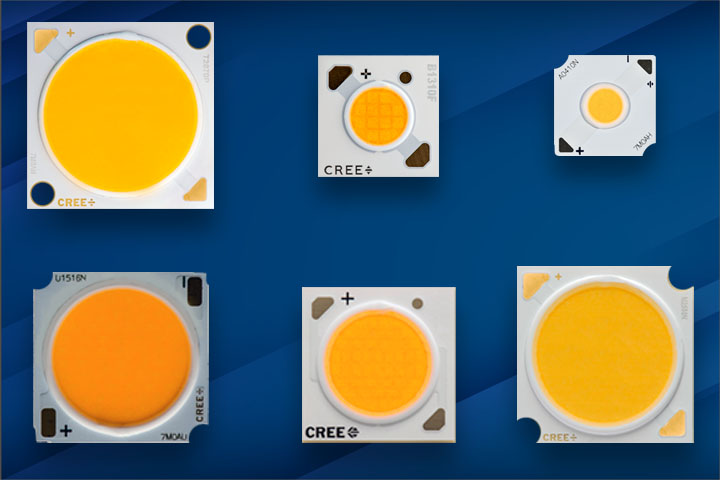
Cree LED has the industry's broadest and most comprehensive portfolio of chip-on-board (COB) LED arrays to provide our customers with the perfect solution in terms of size, power, performance, and value. Cree LED COBs have the industry's best L90 lifetime and color stability, as proven by data.
Advantages of Cree LEDs
- Largest portfolio of COBs: all common socket profiles, both metal and ceramic substrates, widest selection of LES sizes
- Leading in LPW, luminous efficacy, service life, and color stability
- Wide range of color options: 70, 80, 90 CRI + Fidelity & Specialty
Latest innovations
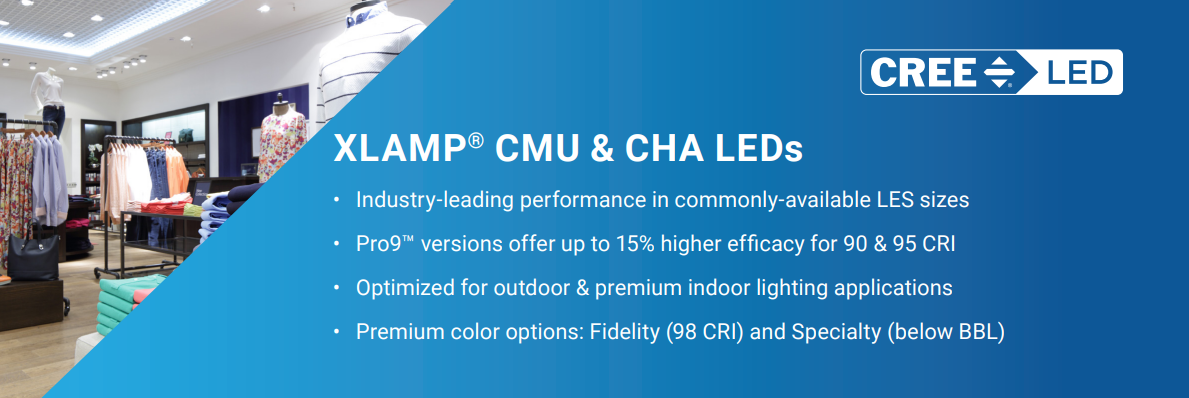
- Pro9™ LEDs: offer up to 15% higher efficiency with a CRI of 90 and 95 compared to standard LEDs, without compromising color rendering quality. Pro9 LEDs feature the industry's highest operating temperature of 105°C and the same maximum current as standard versions. Now available for the CMB, CMU, CHA, CMA, and CXB LED series.
Pro9™ LEDs
Pro9™ technology uses potassium fluoride silicon (KSF or PFS) phosphors to increase the efficiency of LED components, especially those with higher CRI. Cree LED's Pro9 LEDs are subject to a technology license from Current Lighting Solutions, LLC.
Cree LED is the industry leader in using this phosphor in high-power, high-efficiency LEDs, such as COBs, and is the first supplier to successfully use this phosphor in high-power ceramic LEDs.
Pro9 LEDs improve the performance, efficiency, and size of LED luminaires in commercial applications that require high light quality. Pro9 LEDs have the highest operating temperature in the industry at 105°C and feature the same mechanical and electrical characteristics to be upgraded to a higher CRI without compromising performance and with minimal redesign.
Pro9 LEDs: COBs
Cree LED has the industry's broadest and most comprehensive portfolio of chip-on-board (COB) LED arrays to provide our customers with the perfect solution in terms of size, power, performance, and value.
Pro9 LED technology is available for all current COB product families from Cree LED:
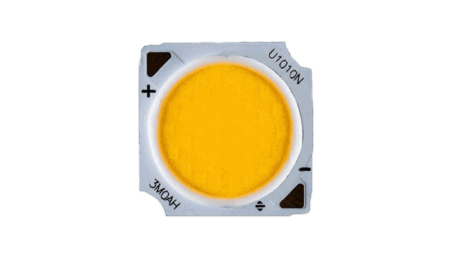
- XLamp®CHA LEDs: high-intensity metal COBs with small LES
- XLamp CMB LEDs: drop-in upgrades for Cree LED COB form factors (CXA, CXB, CMA) with the same LES & substrate sizes
- XLamp CMU LEDs: second-generation high-efficiency metal COBs in industry-compatible sizes
- XLamp CMA LEDs: first generation metal COBs optimized for efficacy at high current
- XLamp CXB High Density LEDs: industry’s highest lumen density ceramic COBs
- XLamp CXB Standard Density LEDs: high-efficiency, high-reliability ceramic COBs
Pro9™ LEDs: COB color point options
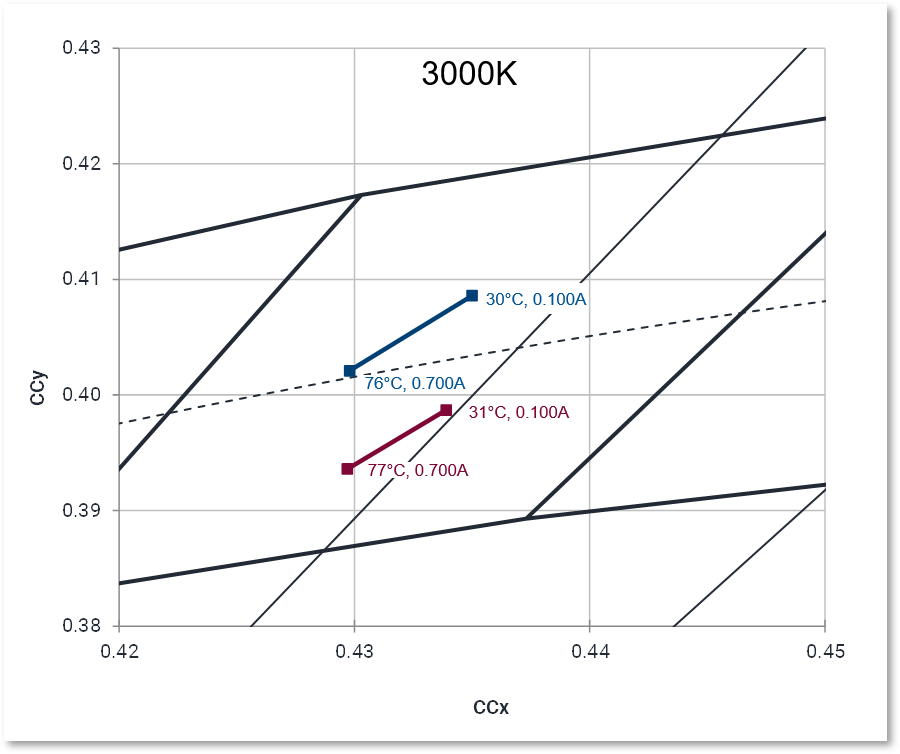
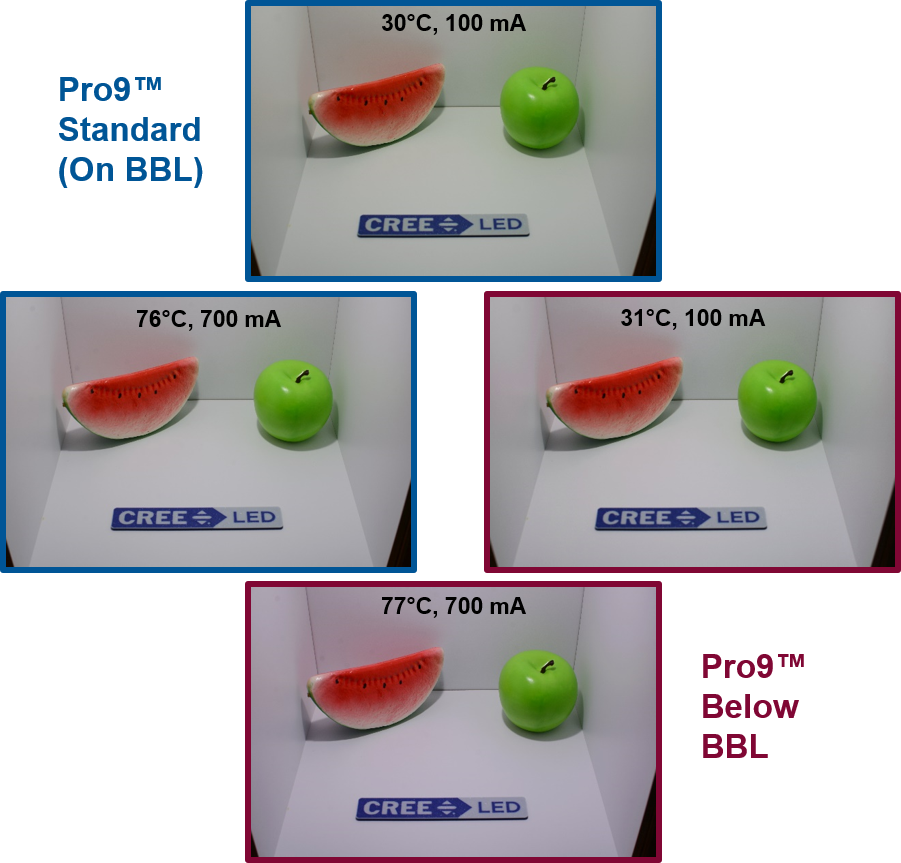
Pro9 COB LEDs are now offered in two color point options: standard (on BBL) and below BBL, available in CCTs from 4000 K to 2700 K. These options help lighting manufacturers achieve optimal color rendering under various LED operating conditions.
Standard (on BBL): Provides a balanced white point at higher operating temperatures. At lower temperatures, the light may appear slightly greenish.
Below BBL: Maintains a balanced white point at lower operating temperatures. At higher temperatures, the light may appear slightly pink.
Pro9 LEDs: COB reliability
The lighting industry has recognized that KSF phosphor enables significantly higher efficiency for warm white lighting applications with high CRI. However, it is also known that KSF phosphor can pose technical challenges, particularly when it comes to maintaining long-term reliability under demanding operating conditions.
Not all KSF phosphors are created equal. Likewise, not all LED suppliers have the expertise to fully leverage the potential of this phosphor in LED lighting. Cree LED's Pro9 products feature our second-generation KSF-based phosphor solution, specifically designed for high performance and exceptional long-term reliability.
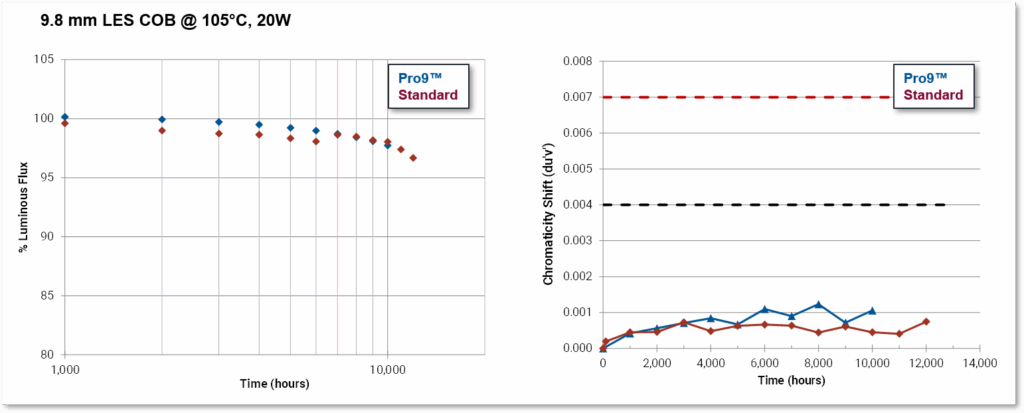
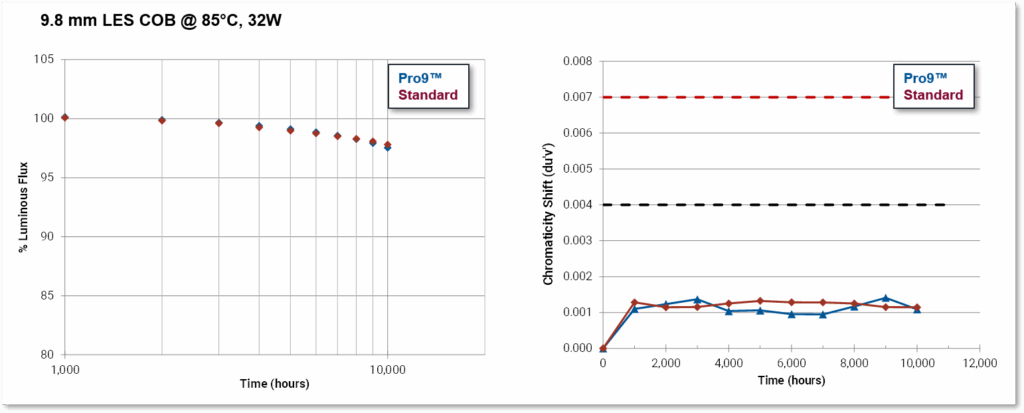
In many cases, the Pro9 versions of our LEDs match or exceed the long-term reliability of the standard versions—even under difficult conditions. To confirm this, Cree LED conducted 10,000 hours of LM-80 testing with Pro9 COBs. The results compared to our standard COBs are shown in the following graphs.
Brochure